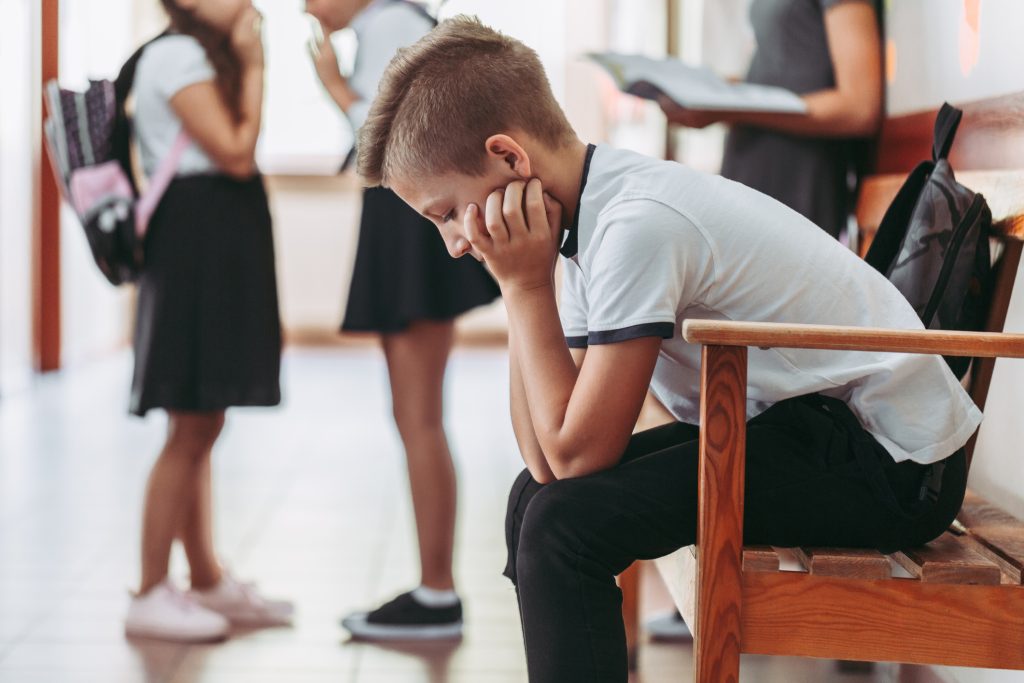
Recent figures suggest one in three children and young people experience some form of bullying during their school years. Lorraine Glass, Director of Anti-Bullying Service, respectme discusses the impact and reach of bullying in today’s modern world – and where adults can find tools to better equip them to help.
If a child told you today that they were affected by bullying, would you know what to do? Bullying touches many lives, whether you have experienced it, witnessed it or taken part in it. It is often dismissed with tired clichés such as “kids will be kids”, “It happened to me and I turned out okay” and of course, the classic – “It made me stronger”. It didn’t. You found a way to cope and survive whilst realising that the world was not as safe as you once believed and that people could be incredibly cruel. This lens can alter and affect all future relationships – bullying has a very long tail.
Understanding the scale of the problem
The Scottish definition of bullying is: “Bullying is face-to-face and/or online behaviour which impacts on a person’s sense of physical and emotional safety, their capacity to feel in control of their life and their ability to respond effectively to the situation they are in. The behaviour does not need to be repeated, or intended to cause harm, for it to have an impact. Bullying behaviour can be physical, emotional or verbal and can cause people to feel hurt, threatened, frightened and left out.”
Today, we know that minimising bullying is both outdated and dangerous and can leave children and young people exposed to harmful behaviour with long-lasting effects. If bullying was treated like a medical condition affecting a child we love, work with or care for, we would be relentless in understanding how to prevent it from happening in the first place and in learning what to do to respond to it quickly and effectively. Bullying requires this same urgency and focus – it is not an inevitable part of growing up and is never acceptable.
Bullying is a complex and wicked problem, a violation of children’s rights and can can negatively impact all of the GIRFEC Health & Wellbeing indicators.
The scale of the issue demands attention. One in three (approx 30%) children and young people report being bullied by peers in school (UNESCO, 2019). This was reported as to be both in person and online.
The evolution of online spaces has enabled it to thrive in secrecy and darkness, with no real escape for young people experiencing it. Ofcom research from 2022 found that, among children who experienced bullying, 84% said it happened through a device. The recent developments in generative AI technology add another layer of damaging sophistication.
Being a supportive adult and the duty of care
These figures are not abstract: each one represents a child or young person who needs adults to notice, listen and respond well.
The pace of behavioural and technological change can make it feel particularly overwhelming, but our core role as supportive adults remains solid in respecting children’s rights, building supportive relationships, noticing changes, listening carefully, asking open questions and creating conditions where children can tell us what is happening in their lives without fear.
The professional duty to protect children is not only a requirement of the UNCRC (Incorporation) (Scotland) Act 2024, but is also written into the duty of care expectations for all educational and childcare practitioners as well as being a parental responsibility as set out in the Children (Scotland) Act 1995. ‘Respect for All: The National Approach to Anti-Bullying for Scotland’s Children and Young People’ explains what bullying is and explores the impact it can have. It offers adults and professionals a clear outline in how to prevent and respond to bullying, as well as showcasing evidenced examples of inclusive practice. For most adults, keeping children safe is a natural, intuitive call – the legislation simply supports that longing.
Our annual Anti-Bullying Week also aims to raise awareness of both the damaging impacts of bullying and how to respond in an supportive, but meaningful, way.
Anti-Bullying Week 2026
To celebrate Anti-Bullying Week 2026 (16-20 November), we’ve launched ‘Be Unique – Bullying is wrong. Let’s get along’. The campaign features a new film and animation, including a suite of digital learning resources to engage children and young people on the theme of prejudice-based bullying. Featuring real children’s voices, the animation highlights the reasons children and young people have experienced bullying and celebrates what makes us ALL different and unique. Watch it with the children and young people you support, use the learning resources to explore the theme together, and ask ‘What can I do to help children feel safe, included, valued and respected?’
Access the campaign resources here: Scotland’s Anti-Bullying Week Theme | respectme
Moving forward together
All adults have a vital role in helping children and young people to develop both healthy in-person relationships and healthy online habits, as well as being aware of the impacts of bullying.
respectme has a full suite of ways to build confidence, competence and capacity to respond to bullying. Register today for a respectme Anti-Bullying Learning Academy account to access a unique library of eLearning courses, including materials on Bullying and Neurodiversity, Trauma, Body Image, Mental Health, Online Bullying, Sport, School Transitions, AI and many more.
Lorraine Glass is Director of respectme, Scotland’s Anti-Bullying Service. Find out more at respectme.org.uk
More information and resources
Our pages, written for parents and carers, explains more about what schools should be doing to quickly and effectively deal with any incidents that arise. We outline steps schools should take, as recommended in Scottish Government guidance, and provide advice and information around getting support for learning during this time.
We also have a dedicated section on Reach, our website for children and young people, which explains what bullying might look like and what to do if you are being bullied. This is a helpful resource to share with young people in your life who may be looking for more information, advice and support.